I’ve seen quite a few posts lately talking about how important context is when using AI to code. I couldn’t agree more. For me, vibe coding isn’t about asking the AI what to code, it’s about explaining what we want to achieve. It reminds me of something I heard years ago—programming is less about knowing how to do something and more about knowing what can be done.
As a senior developer, I’ve built up a strong understanding of the tools at my disposal—React, REST APIs, SQL, and many others. I also know what I want to achieve with the products I’m developing. When I bring that knowledge into the conversation with AI, I can guide it in the right direction and ensure the tools are being used correctly. That combination feels like a genuine superpower.
I wouldn’t claim that AI makes me ten times faster, but it has changed the way I work. I’m now able to deliver far more value in the same amount of time. That shift in output and focus is where the real impact or AI Coding/Vibe coding lies.
Month: September 2025
Start Simple!
When we talk about software architecture, it’s easy to get lost in diagrams full of boxes, arrows, and buzzwords. But for most startup projects, the foundation doesn’t need to be complicated.
At its simplest, you need three layers. The front end, where users interact with your product. The back end, which includes authentication and the business logic that powers the experience. And the database, where the information lives. That’s enough to get started and build something meaningful.
And here’s the exciting part: today we can vibe code across all of these layers. Tools like Bolt.new make it quick to spin up front ends. ChatGPT or GitHub Copilot can help shape the back end and authentication logic. They can even guide you through setting up and querying your database. Beyond those, there’s a growing world of AI tools that can fit in wherever you need them.
You don’t need queues, event buses, or complex logging right away. Keep it simple, focus on delivering value, and let these tools accelerate your progress. The sophistication can always come later—when your product, team, and users are ready for it.
Do it right – always!
When we talk about being successful with AI-assisted coding, I think it’s easy to focus too much on the “magic” of the AI and forget the fundamentals. But success doesn’t come from just pressing generate. It comes from the same balance we’ve always needed in software: good ideas, the right technologies, and solid practices.
The first part is the idea itself. It’s tempting to throw every half-baked thought at an AI and hope it will shape it into a masterpiece. But that usually leads to messy, disconnected code. A better approach is to move step by step, layering features carefully so that modules fit together naturally. Just like in traditional coding, structure and pacing matter.
The second part is the technology. AI can write React code, for example, but it won’t decide for you whether state should sit inside a component, live in a shared context, or be managed through a dedicated state manager. Understanding those building blocks is what keeps a project performant, secure, and scalable. Without that knowledge, it’s very easy to end up with something fragile.
And then there are best practices. File sizes grow too large if you never pause to split them. APIs can quickly become unmaintainable if you don’t validate authentication properly. Test coverage, error handling, naming conventions — these are the details that separate “something that runs” from “something that lasts.”
There are other pieces too: version control discipline, clear documentation, and thinking about deployment early rather than as an afterthought. All of these add up. AI coding helps us move faster, but it doesn’t replace the craft, it amplifies it. And when we respect both the creativity of the idea and the discipline of the practice, that’s when we start to see real success.
Give AI (Code) a chance
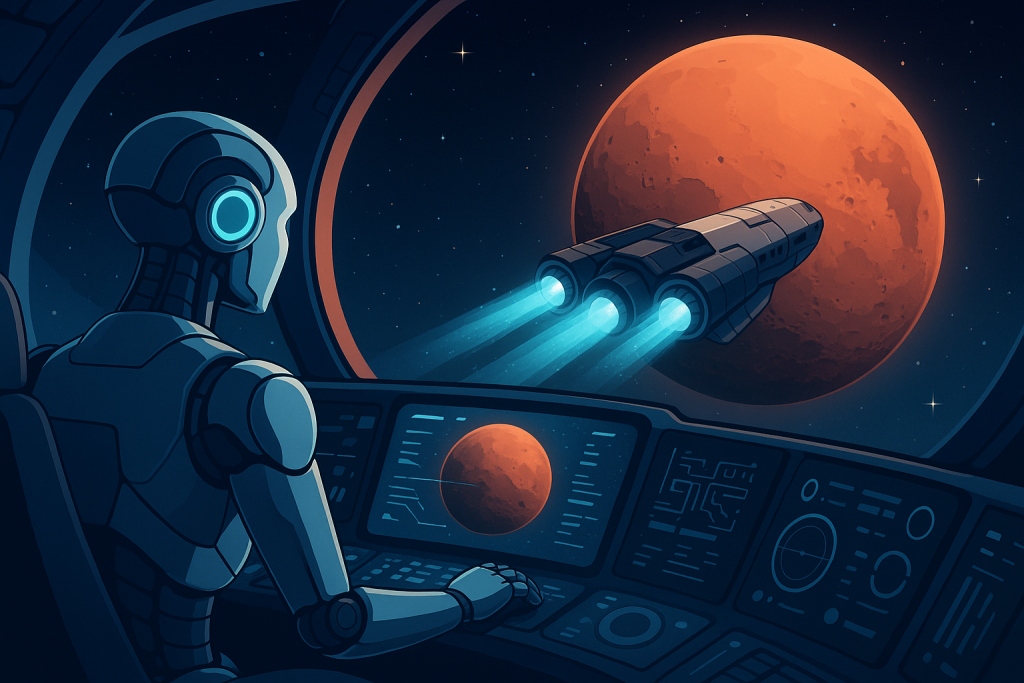
On LinkedIn we’re seeing so many posts about vibe coding. Some people are very positive about it, others very negative. One thing that stands out to me is that a lot of the criticism comes from expecting vibe coding to solve the hardest, most obscure parts of programming. But why would we expect AI to already be able to tackle the trickiest computer science challenges?
Medicine began thousands of years ago, but we didn’t expect heart surgery right away. Engineering has been around for centuries, but skyscrapers came much later. Programming languages are only a few decades old, and it took time before we had web sockets and modern encryption. Even space flight started more than fifty years ago, yet we’re still not on Mars.
But what it can do is amazing. We can already spin up entire websites from scratch, generate BI dashboards that pull together complex data, or scaffold API backends in minutes. It helps with testing, boilerplate code, documentation, and even brainstorming design ideas. These are all the kinds of tasks that normally take up time and energy, and now we can shift more of that effort into creative problem-solving. The fact that AI can reliably handle this level of work today is not a limitation—it’s progress worth celebrating.
So maybe we need to give AI the same patience. Instead of demanding that it solve the hardest coding problems right now, let’s allow it the years it needs to grow. Just as doctors needed centuries before achieving successful heart transplants, AI will need time to mature before we can expect it to handle the deepest corners of our code.
We can “Just rewrite it” now
One of the most surprising benefits of AI-assisted coding is that it finally makes rewriting a project practical.
Back in 1970, Winston W. Royce *, in his paper Managing the Development of Large Software Systems, suggested that the only way to build a great application is to write it twice. As he put it, “arrange matters so that the version finally delivered to the customer for operational deployment is actually the second version.”
The first pass teaches you what really works and what doesn’t. The second pass is when you get it right. In the past, rewriting a full project was too expensive and time-consuming, so most teams just pushed forward with whatever they had. But with AI code generation, we can now revisit the same idea multiple times without months of extra effort, refining it each time until it’s something truly solid.
It’s like old wisdom finally caught up with the tools we have today.
* Winston W. Royce, Managing the Development of Large Software Systems is usually seen as the origin of the Waterfall method of Software Engineering
It’s about knowing what can be done

I’ve seen quite a few posts lately talking about how important context is when using AI to code. I couldn’t agree more. For me, vibe coding isn’t about asking the AI what to code, it’s about explaining what we want to achieve. It reminds me of something I heard years ago—programming is less about knowing how to do something and more about knowing what can be done.
As a senior developer, I’ve built up a strong understanding of the tools at my disposal—React, REST APIs, SQL, and many others. I also know what I want to achieve with the products I’m developing. When I bring that knowledge into the conversation with AI, I can guide it in the right direction and ensure the tools are being used correctly. That combination feels like a genuine superpower.
I wouldn’t claim that AI makes me ten times faster, but it has changed the way I work. I’m now able to deliver far more value in the same amount of time. That shift in output and focus is where the real impact or AI Coding/Vibe coding lies.